Key Takeaways & Executive Summary
- April to May: Witness the intricate courtship bill-clacking dance of the Waved Albatross on Española Island.
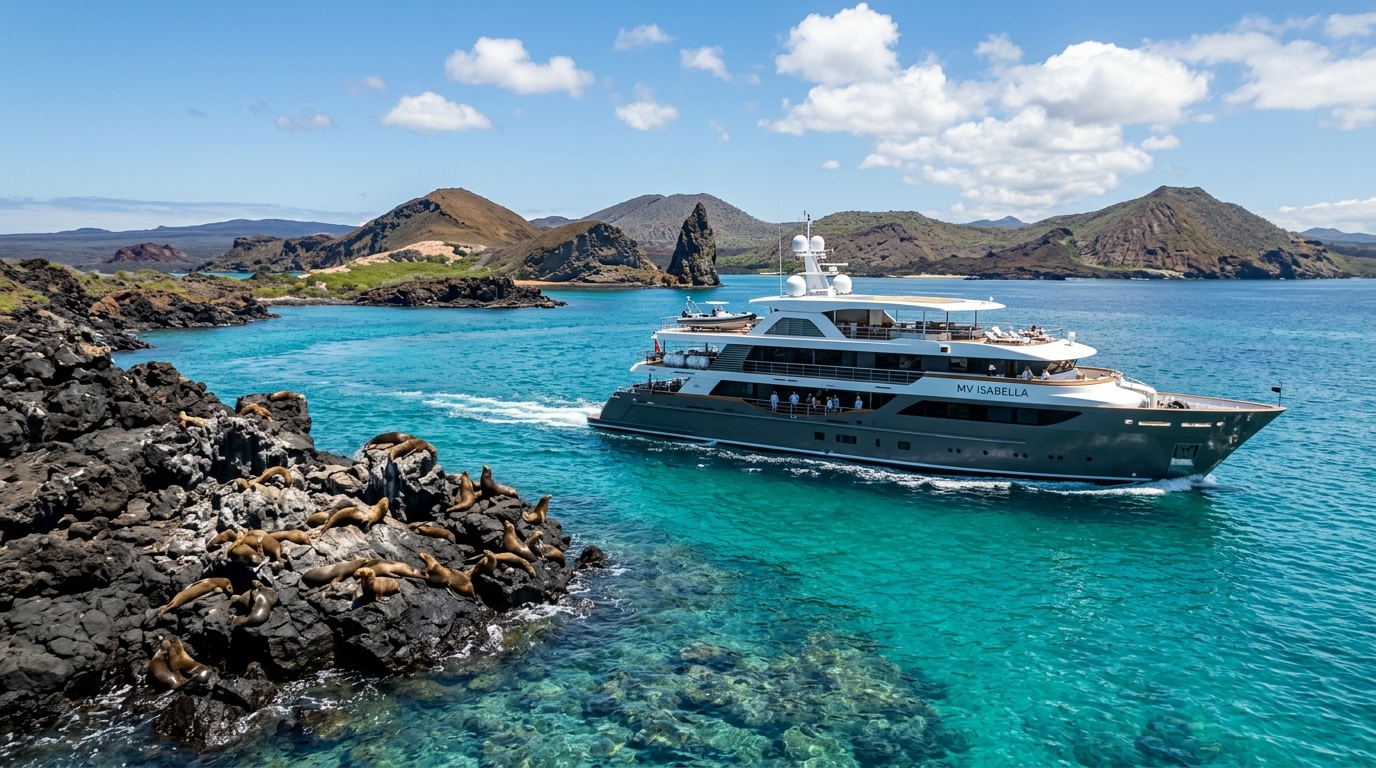
- July to October: Peak cold Humboldt current brings whale sharks to Darwin and Wolf, alongside playful sea lion nursery activities.
- December to February: Giant tortoises hatch on Santa Cruz Island and green sea turtles begin nocturnal beach nesting.
- Year-round sightings: Blue-footed boobies, endemic marine iguanas, Darwin finches, and flightless cormorants are visible in every season.
A Sanctuary for All Seasons
Unlike many destinations where animals migrate away, wildlife lives in the Galapagos year-round. However, their mating, nesting, and feeding behaviors change with seasonal currents.
Warm & Wet Season (December–May)
Calm waters, warm sea temperatures (24°C–28°C), and bright tropical sunshine make this ideal for swimmers. Land birds are active, giant tortoises hatch, and sea turtles nest along pristine volcanic beaches.
Cool & Dry Season (June–November)
Nutrient-rich Humboldt currents trigger marine blooms. Snorkelers encounter whale sharks at Darwin and Wolf, while sea lion colonies welcome playful new pups across tidal pools.
Choosing Your Ideal Travel Window
Our expedition advisors evaluate your personal wildlife priorities to match you with the precise week, vessel itinerary, and island landings that align with your dream sightings.
There is no off-season in the Galapagos. Every month brings a miraculous wildlife milestone—whether it is giant tortoise hatchlings or playful sea lion pups investigating your snorkel mask.
— Dr. Mateo Alarcón, Marine Biologist